

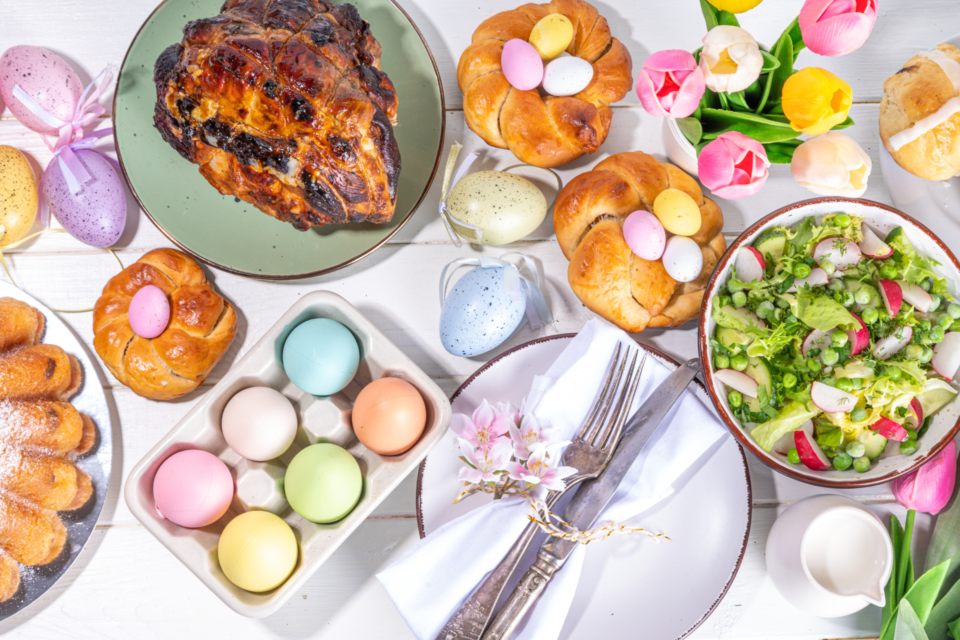
The warm spring weather and the Easter celebrations bring the joy of gathering around the table, and the comfort of beloved seasonal dishes in Hungary. Ham, braided bread, hard-boiled eggs, and homemade pastries are necessary elements of the holiday spread — but so is the reality that festive cooking almost always produces more than a family can eat. Though with a little planning ahead, we can prevent waste and enjoy every bite to the fullest. In this article, we share how to celebrate Easter safely while leaving no crumbs behind.
In the days leading up to Easter, it’s worth taking a look at what’s already in your fridge and freezer. Clearing some space not only makes room for holiday ingredients and leftovers, but it also gives you a chance to rediscover what’s already there. You might be surprised how naturally freezer staples fit into the Easter menu: previously frozen minced meat makes a delicious meatloaf, while frozen vegetables are just the thing for a classic mayonnaise salad.
One of the trickier parts of Easter hosting is never quite knowing how many people will end up at the table. A practical solution is to prepare a batch of studier goods alongside the cream-filled pastries that are best enjoyed fresh. Linzer cookies, cheese crackers and scones hold up for days or even weeks after the holidays, especially if you freeze them!
Many of the dishes that make up the traditional Easter table – ham, ham rolls, deviled eggs, egg salad, roasted meats, and cream-filled cakes – are also among the most perishable. A little extra care goes a long way here: rather than setting everything out at once, serve smaller portions and replenish from the fridge as needed, so food spends as little time at room temperature as possible. As a general rule, perishable dishes shouldn’t sit out for more than two hours. Make sure your fridge is set to between 0 and 5°C.
Thinking ahead about how to use up leftovers is one of the simplest ways to reduce waste after the holiday. Hard-boiled eggs, for instance, can find a second life in egg salad, potato gratin, or a light pasta salad. Leftover ham is the perfect starting point for a hearty bean soup, lentil stew, a cheesy ham pasta, or a flavourful sandwich spread. Even the braided bread has plenty of potential: transform it into a poppy seed crumble, a layered bread bake, or classic French toast.
Sustainability can also play a part in one of the most beloved traditions of Hungarian Easter: egg dyeing. Instead of reaching for artificial colours, try using what’s already in your kitchen. Red or purple onion skins, beetroot peels, the outer leaves of red cabbage, and even coffee grounds can all produce surprisingly beautiful and natural colours.
And whichever eggs you dye — blown or hard-boiled — make sure none of them goes to waste. Raw eggs removed from their shells can be frozen for later use in baking or cooking, while hard-boiled eggs can be kept refrigerated and served on the Easter table.